By Seerat Fatima · 20 August 2026
The cards have started arriving. November to February is wedding season, and if you have three or four shaadis lined up, you already know the real problem — it is not one outfit, it is eight. Dholki, mehndi, baraat, walima, and then the same faces at the next wedding two weeks later.
Here is what each function actually asks for, what to avoid, and how to get through the whole season without buying a new outfit every weekend.
First, the Budget Reality
Formal and wedding wear on TrendCompare on 20 August 2026 — 2,127 in-stock pieces for women:
| Where prices sit | Amount |
|---|---|
| Cheaper quarter starts around | Rs. 9,750 |
| Middle of the market | Rs. 16,810 |
| Pricier quarter starts around | Rs. 24,512 |
Two numbers worth holding on to: 935 pieces are under Rs. 15,000, and 1,619 — over three quarters of everything in stock — are under Rs. 25,000. Wedding wear feels unaffordable because the couture pieces get all the attention. The bulk of the market is not there.
1. Dholki — The Easy One
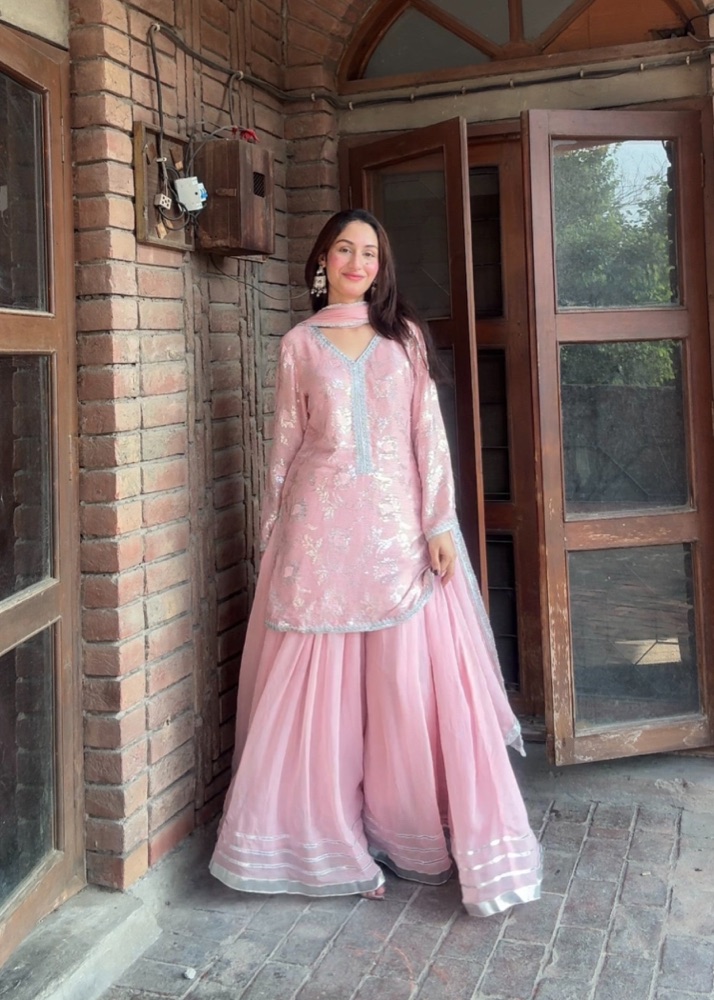
Dholki is at someone's house, there is dhol, there is dancing, and you will be sitting on the floor for half of it. This is the function people overdress for.
What works: a light embroidered gharara or sharara, or a good kurta with a well-worked dupatta. Soft colours — peach, mint, powder blue, dusty pink. Something you can move in.
What to skip: heavy work, a long trail, tight fits, and high heels. Flats or low block heels.
Smart move: This is the function to repeat an outfit at. Dholkis are small and informal, and nobody is photographing every guest.
2. Mehndi — Colour Is the Point
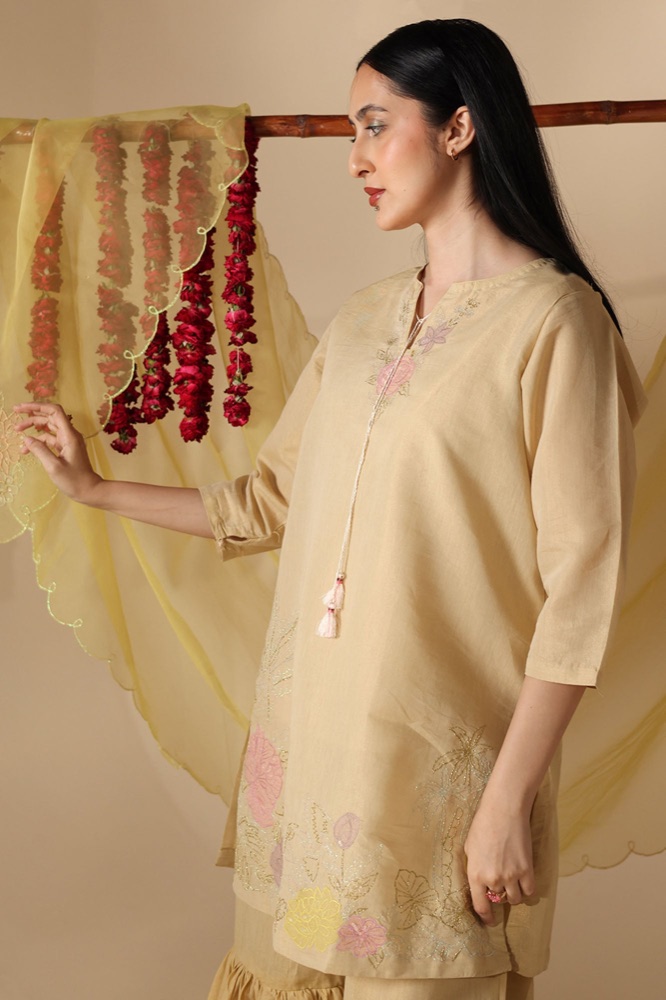
Mehndi is the most fun function to dress for and the one with the clearest brief: colour. Yellow, green, orange, mustard, fuchsia — the brighter end of your wardrobe.
What works: gharara, sharara or a lehenga in a strong colour. Mirror work, gota, and fresh flower jewellery instead of gold.
What to skip: black and dark navy — you will be the only one in the photos who looks like she came from an office. Also skip anything so long you cannot dance in it.
Smart move: A mehndi outfit is the hardest to re-wear, because bright yellow and green are memorable. If your budget is tight across the season, this is the one to borrow or to buy at the cheaper end.
3. Baraat — The Formal One
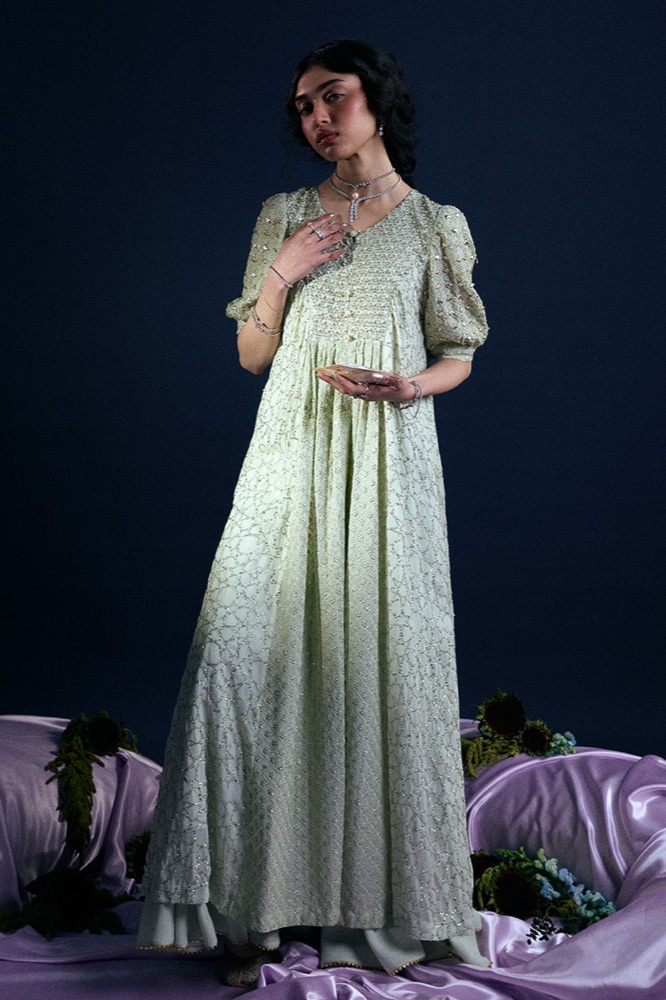
Baraat is the big evening function, usually at a hall, usually heavily photographed. This is where you dress properly.
What works: a saree, a formal lehenga, or a heavily worked gharara. Deeper, richer colours — emerald, wine, teal, royal blue, gold.
What to skip: red. The bride is in red at baraat, and standing near her in the same colour is the one guest mistake everybody notices. Also avoid full white or ivory here.
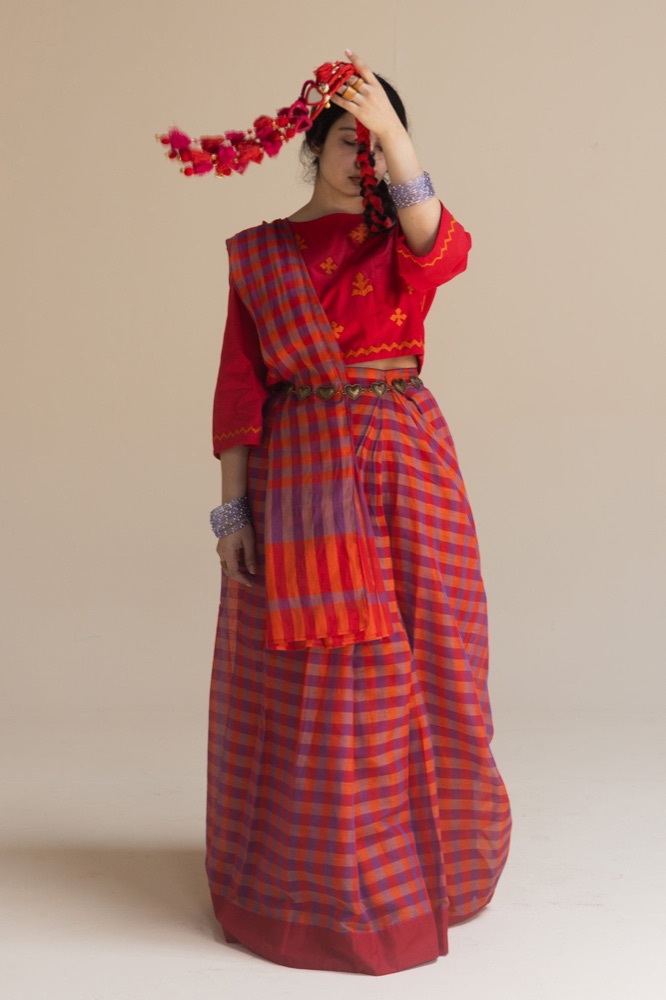
Smart move: Spend your largest share of the season's budget here. Baraat photographs are the ones that circulate, and a good formal outfit will carry you through several seasons.
4. Walima — Soft and Polished
Walima is the groom's side's event, usually a lunch or a dinner, and it is the most restrained of the four. Elegant rather than loud.
What works: pastels and soft neutrals — ivory, champagne, dusty rose, sage, powder blue. Organza, chiffon, jamawar, or a fine silk. Clean tailoring beats heavy work.
What to skip: very heavy bridal-style work, and again, do not turn up in something that reads as a bridal outfit — the bride often wears pastel or ivory at walima.
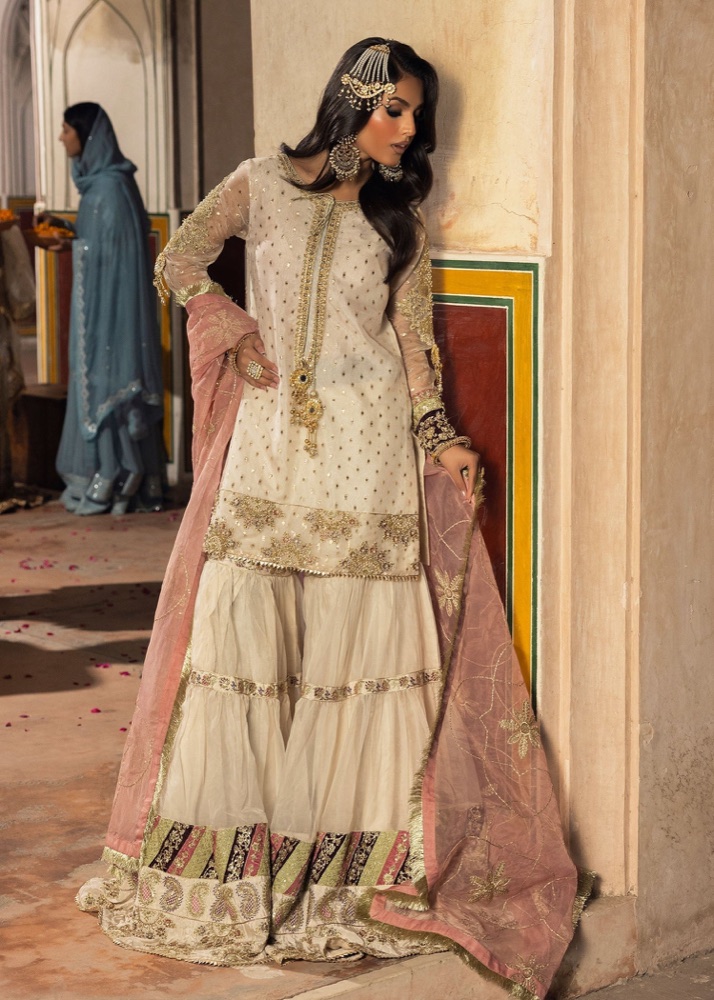
Smart move: Walima outfits re-wear better than any other wedding piece. A pastel gharara works at the next wedding's dholki, at Eid, and at a formal dinner. Buy the walima outfit as the season's workhorse.
Four Functions Without Four Outfits
Nobody wants to spend Rs. 60,000 on one wedding. You do not have to:
- Buy two, borrow one, repeat one. Buy the baraat and walima outfits. Borrow the mehndi one, since it is the least re-wearable. Repeat something you already own at the dholki.
- Change the dupatta, not the outfit. A different dupatta and different jewellery genuinely changes how an outfit reads at a different function, in front of a mostly different set of guests.
- Split by crowd, not by date. The people at a dholki are rarely the people at the walima. Repeat within a wedding rather than across weddings, where the same friends see you twice.
- Buy your season's outfits now, in one go. Prices climb once wedding season begins in November, and the good sizes go first.
- If you are getting something stitched, order by early October. Darzis are booked solid from November onwards, and rates rise with demand.
The Rules Nobody Writes Down
- Do not wear red to the baraat. The single most-noticed guest mistake.
- Do not wear full bridal white or heavy ivory to the walima if the bride is likely to be in pastels.
- Do not out-dress the bride at any function. If your outfit is heavier than hers, it is the wrong outfit.
- Check the venue. A lawn wedding in December is cold — that gorgeous chiffon needs a shawl you have actually planned for.
- Walk in your shoes at home first. Every wedding has one guest limping by 11pm.
Before You Buy
Wedding wear has the widest price spread of anything in Pakistani fashion — pieces that look similar in a photograph can differ by tens of thousands depending on the brand, the fabric, and whether the dupatta and trouser are included. Check what is actually in the box before you pay: a "3-piece" from one brand is not the same as a "3-piece" from another.
Compare across brands, decide which function deserves your budget, and remember that the outfit you can wear three more times is worth more than the one that photographs best once.
Compare wedding and formal wear across 22 Pakistani brands →
About the prices: figures are from the live TrendCompare catalogue on 20 August 2026, covering all 2,127 in-stock women's formal and wedding pieces. The middle price is the median; the quarter figures are the 25th and 75th percentiles across every matching item. Individual prices shown were live on that date and change hourly — check the listing before you buy.


